

One of the things I keep track of closely is what the average individual investor portfolio looks like — i.e. how investors are positioned in the aggregate.
This is useful because it helps inform what stage of the cycle we are in, what the mood is, what the average exposure is, and where potential energy is building up (because major shifts and extremes in positioning often portend future explosive moves).
Here’s the perfect example.
This chart shows US household aggregate weighting to stocks at a record high.
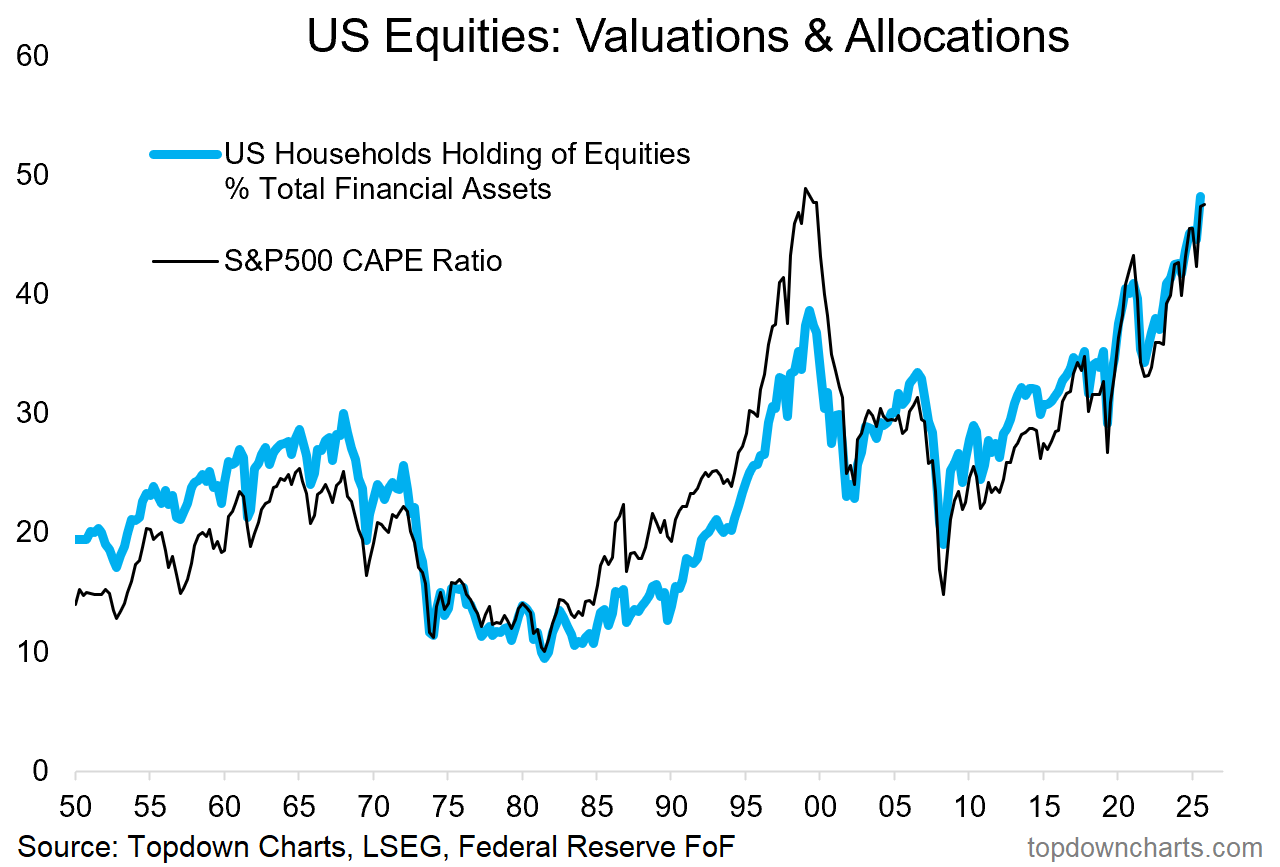
And the interesting thing is, household allocations to equities are at a record high at a time when valuations are likewise tapping on the all-time highs.
And then dig a little further and you realize that the average investor in the US stockmarket is heavily skewed into tech and tech related sectors.
That’s a trifecta of extremes!
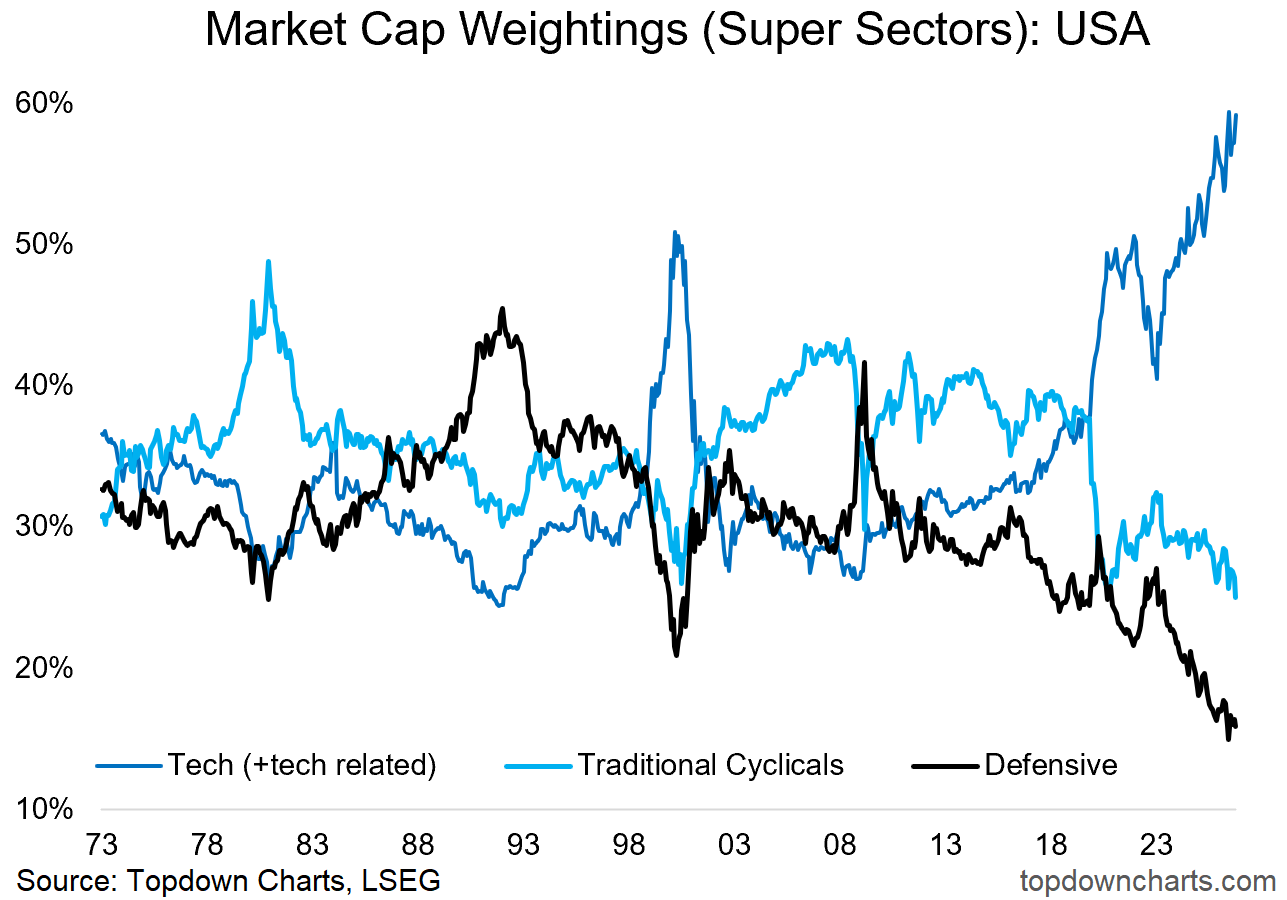
But then also notice on the sector chart above, and there’s something at the opposite end — Defensive sectors have shrunk to record low weightings.
For the average passive index investor, their portfolio is increasingly all-in on tech stocks, and less and less defensive. Their portfolio is one big bet on the boom times of the past few years continuing on.
And by definition it is a portfolio that is far riskier than usual.
Then consider defensive assets…
Investor allocations to bonds and cash are approaching record lows.
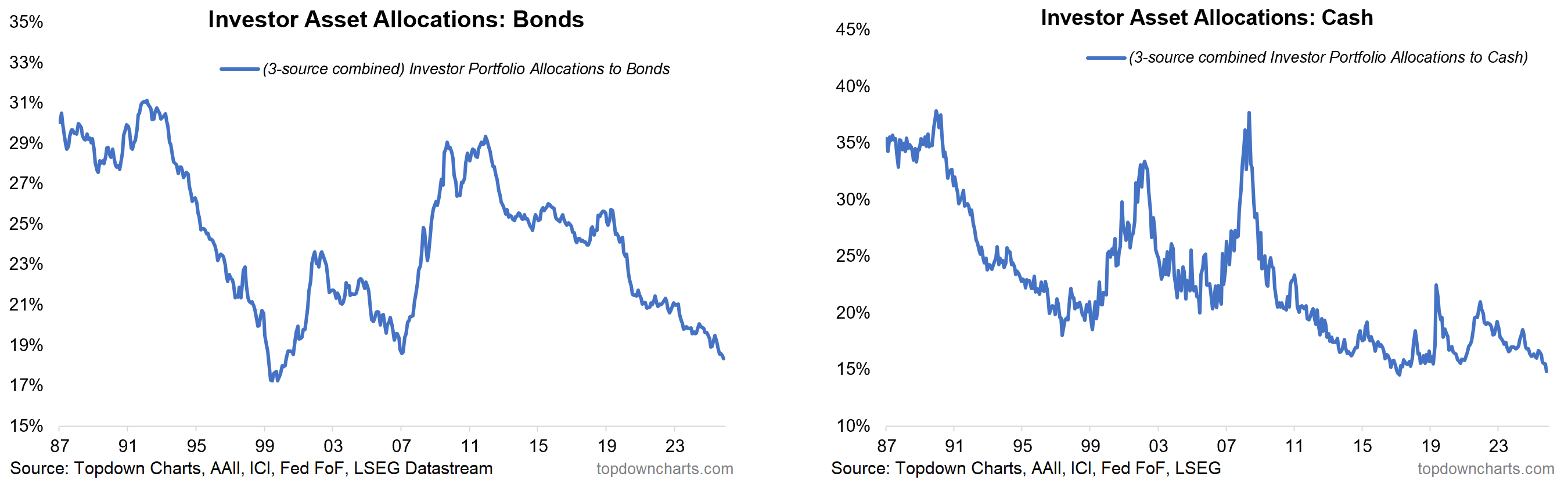
These are supposed to be the assets that help investors weather the downturns.
There is no desire for defense nor diversification.
In summary, the average investor portfolio has:
Record High allocations to stocks
(which are at record High valuations)
+record High weight to Tech Sector
+record Low weight to Defensives
Near record Low allocation to Bonds
Near record Low allocation to Cash
i.e. it’s a portfolio dialed to:
-Maximum risk.
-Minimum defense.
The average investor is basically running an aggressive growth strategy, and while it might payoff if the bull market keeps calm and carries on and on —it is a portfolio that will suffer significantly in the next downturn.
This sort of information should serve as a prompt to consider risk management, asset allocation strategy and diversification/defense.
I will be covering specific ideas on how to help protect capital during the next downturn (and even profit from it) in coming editions of my Weekly Macro Themes report —and I will as a matter of course be covering when to flip the script here and go all-in on defense from an active asset allocation standpoint.
And there will be a time for a pivot to max-defense positioning, maybe not now, but maybe sooner than we expect, and ultimately that’s one of my key jobs with the TD Pro service and what I spend a huge amount of time working on and thinking about.
So for that reason alone, it is worth considering a subscription —because it’s not just about maximizing returns, but also about protecting those gains, preserving capital, and being ready to make the most of opportunities on the other side of the downturn.
Sign up now to access ideas for upsides AND downsides: [Upgrade to Paid]
If you have any questions about the service or reports, simply get in touch.
—
Best wishes,
Callum Thomas
Head of Research & Founder at Topdown Charts
Connect: LinkedIn | Twitter/X | Substack
Learn more about the service — reports walkthrough +how to use it:
Learn more about my approach to top-down global multi-asset investing: